-
Cardio Equipment
- Cardio Equipment
-
Weight Plates, Barbells & Kettlebells
- Weight Plates, Barbells & Kettlebells
-
Rehabilitation & Physiotherapy Equipment
- Rehabilitation & Physiotherapy Equipment
-
Gym Flooring
- Gym Flooring
-
HYROX Training Equipment
- HYROX Training Equipment
-
REP Fitness
- REP Fitness
Strength after 35: what a 47-year study means for your training
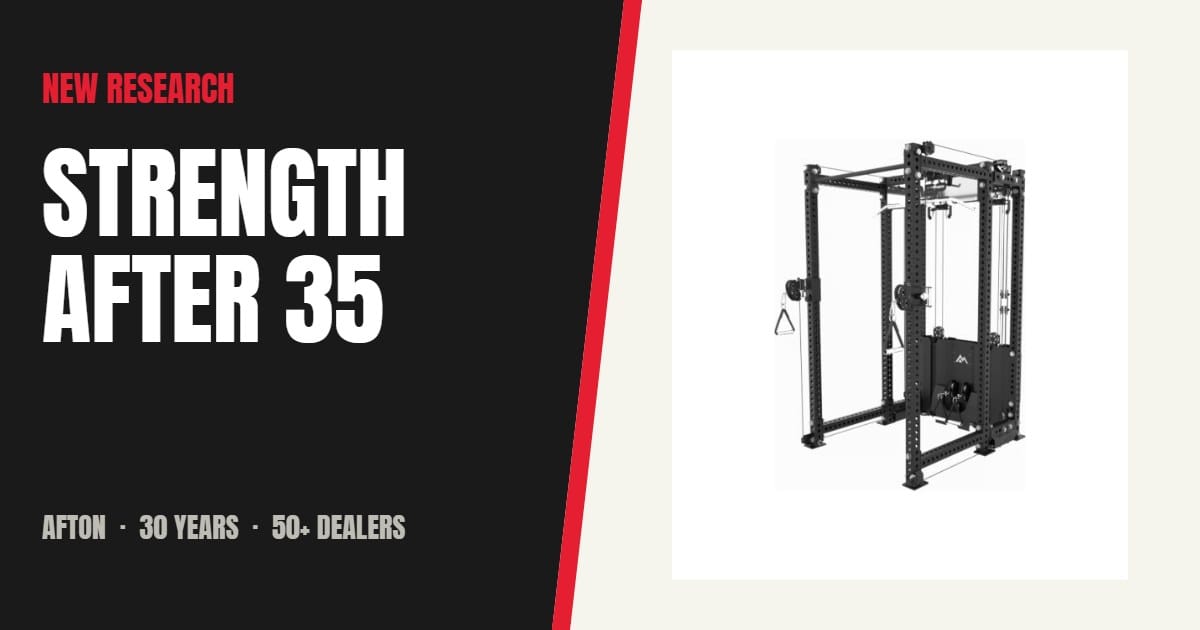
Two studies making news in October 2026 say something every adult over 35 should hear. Strength and fitness start to slip earlier than most of us think, and the right kind of training slows that slide. You do not need a big gym to act on it. A small, well chosen setup at home, in your society gym or at the office is enough.
We have been helping people in India set up gyms for 30 years. Here is what the new studies found, what they did not find, and how to turn it into a simple plan.
What a 47-year study found
Researchers at Karolinska Institutet in Sweden followed 427 men and women born in 1958, testing them again and again from age 16 to age 63. The results appeared in the Journal of Cachexia, Sarcopenia and Muscle and were widely reported this month.
- The peak comes early. Aerobic fitness and muscular endurance peaked between about 26 and 36. Explosive power peaked even earlier.
- The decline starts around 35. It is slow at first and speeds up with age. By 63, average performance had fallen by roughly 30 to 48 percent from the peak.
- Men and women declined at a similar rate.
- Training still works. People who became active as adults improved their physical capacity by about 5 to 10 percent. In the lead author's words, physical activity "can slow the decline in performance, even if it cannot completely stop it."
That last point matters. Nobody can stop ageing, but the gap between someone who trains and someone who does not keeps getting wider with every decade.
What a study of 72-year-olds found
A second study, from the University of the Sunshine Coast in Australia and published in the journal Maturitas, followed 123 healthy adults with an average age of 72. For six months they trained three times a week for 45 minutes, at high intensity (intervals), moderate intensity or low intensity.
- All three groups lost a little fat.
- The moderate group lost a small amount of lean mass along with the fat.
- Only the high intensity interval group lost fat while keeping its lean mass.
The researchers were careful to say the changes were modest, and their scans measured lean tissue, not strength. So this is not a reason to jump into hard intervals without preparation. It is a reason to include some harder efforts, safely, once you have a base.
What this means in practice
Put the two studies together and a simple message comes through. Start before you feel old, lift something meaningful, and add a little intensity rather than only going for long, easy sessions. For most people over 35, three sessions a week is a realistic target.
Session A and B: strength
- A squat or leg press pattern. Goblet squats, box squats or a squat machine.
- A hinge. Romanian deadlifts or trap bar deadlifts, which are kind to the lower back when done well.
- A push and a pull. Incline press or push ups, plus a row or assisted pull up.
- Something for grip and balance. Carries with dumbbells or kettlebells, and step ups.
Do two or three sets of 6 to 12 repetitions, stopping with one or two good repetitions left. Add a little weight when the last set feels easy.
Session C: intervals
Once you have a few weeks of regular training behind you, add one short interval session. On an air bike or rower, try six rounds of 30 seconds hard and 90 seconds easy. Low impact machines let you work hard without pounding your knees. If you have a heart condition, high blood pressure or a joint problem, speak to your doctor first.
The equipment that makes this easy
The best setup is the one you will use three times a week. You do not need a full gym, just a few pieces that cover the patterns above.
A rack, a bench and a bar
A power rack lets you squat and press safely on your own because the safety arms catch the bar if you fail a lift. Browse our racks and cages, then add an adjustable bench such as the REP AB-3002. For many women and newer lifters, a 15 kg bar such as the REP Colorado Bar 15 kg is easier to start with than a 20 kg bar. Our barbell range also includes trap bars.
Plates and free weights
Rubber bumper plates are quieter and kinder to floors. See our weight plates and kettlebells and free weight ranges.
If you prefer machines
Machines guide the movement, which many people find reassuring when they are starting out or coming back from an injury. Our selectorised strength machines and functional trainers suit homes, societies and corporate gyms. For older members or rehab settings, hydraulic resistance equipment and our elder wellness and rehabilitation range are designed for smooth, low risk movement.
For intervals
An air bike such as the Afton Storm 1.0 gets harder the harder you push, so it suits every fitness level. A rowing machine works the legs, back and arms together.
Flooring
Good rubber gym flooring protects your floor and your joints, and makes a spare room feel like a training space.
A note for society and corporate gyms
Many residential society and office gyms in India are full of treadmills and short on strength equipment. If your members are mostly over 35, a rack, a few benches, dumbbells, a functional trainer and an air bike will do more for them than another row of cardio machines. Our team can look at your space and suggest a layout.
Talk to us
Afton has 30 years of experience and 50+ Afton dealers across India for consultation and installation. Tell us your space and your goals, and we will help you pick equipment you will actually use.
Comments (0)

ABOUT THE SHOP
For 30 years, Afton has been building fitness ecosystems across India: home gyms, commercial gyms, physio and rehab centres, Pilates studios, corporate wellness spaces and hotels. We plan the space, choose the right equipment, install it and service it for years after. From treadmills, cross trainers, bikes and rowers to strength machines, racks, free weights, Pilates reformers and rehab equipment, we work with brands we trust, like SOLE, Spirit, Impulse, Xterra and REP. 50+ Afton dealers, expert installation and our own service teams across the country. AFTON. Where fitness gets engineered.
MY STORE
ADDRESS
2nd Floor, Jamaludeen Towers, 4 Montieth Road, Egmore
Chennai
Tamil Nadu - 600008
IN
Leave a Comment